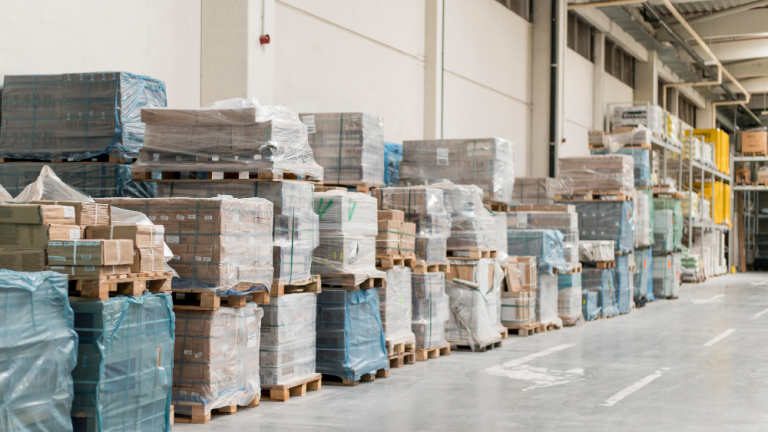
If you’ve been selling on Amazon FBA in the past year, you already know the frustration. Without much warning, Amazon dramatically tightened storage limits across the board — and thousands of sellers were left holding excess FBA inventory they suddenly had no room to store and no fast way to move.
This post breaks down exactly what happened, what it means for your business in 2026, and most importantly — what you can do about it right now.
What Amazon Did to FBA Storage in 2025
Starting in May 2025, Amazon reduced FBA capacity allocations from six months of projected sales volume down to five months. AMZ PREP That sounds like a minor adjustment on paper. In practice, it was anything but.
Some sellers reported their FBA capacity limits were slashed by as much as 75% with only days of notice — going from having hundreds of cubic feet available to being forced to remove inventory they had already shipped in. My Amazon Guy
The timing made things worse. The rollout created confusion among sellers who received their new limits with very little notice, triggering disruption in inbound shipments and causing product availability issues just ahead of critical retail months. B&Q
For sellers already managing tight margins, this was the breaking point. Excess FBA inventory that was previously manageable suddenly became an urgent, expensive problem with no obvious solution.
Why Slow-Moving Inventory Is Now a Bigger Problem Than Ever
Under Amazon’s updated system, excess FBA inventory doesn’t just cost you storage fees — it actively hurts your entire account.
Amazon continues to tie your allowed storage space to performance metrics like your Inventory Performance Index score, sales velocity, and how efficiently you manage stock. Slow-moving or excess inventory will hurt your usable capacity — if you’re sitting on aging stock, it can block your ability to send in your best-sellers. Tonlexing Logistics
That’s the real trap. Your excess FBA inventory isn’t just draining money through storage fees. It’s also preventing you from restocking the products that are actually selling — which means you’re losing revenue on both ends simultaneously.
Restock limits now apply to individual SKUs based on 90 days of recent sales velocity, meaning even top-selling products can get capped if your overall account health is dragged down by slow movers. SellerApp
Amazon’s Built-In Options Don’t Pay What You Deserve
When sellers hit their capacity limits, Amazon offers a few default options — none of them particularly attractive.
Amazon’s Liquidation Program pays a fraction of your product’s value, typically in the range of 5–10% of the average selling price. For sellers who bought inventory at meaningful cost, this often means taking a significant loss.
Removal Orders give you your inventory back — but then you’re left with product in your own warehouse, still unsold, and now with the added cost of return shipping. You’ve solved the Amazon problem but created a new one at home.
Amazon Warehousing & Distribution (AWD) moves inventory off Amazon’s books, but it works best for seasonal items or slower-moving products, and it doesn’t solve the core problem of having excess inventory that isn’t selling at all. Bellavix
None of these options put real money back in your pocket quickly.
The Smarter Exit: Selling Your Excess FBA Inventory Directly
The fastest way to turn the FBA storage crisis into a cash recovery opportunity is to work with direct buyers of excess FBA inventory — companies that specialize in purchasing bulk lots quickly, at fair prices, with no runaround.
Here’s why this beats Amazon’s default options:
You get paid market-rate value — not the 5–10 cents on the dollar Amazon’s liquidation program offers.
You move inventory fast — which immediately frees up your FBA capacity, improves your IPI score, and unblocks your ability to restock winning products.
You eliminate ongoing costs — every day your excess FBA inventory sits in an Amazon fulfillment center, fees accumulate. A direct bulk sale stops the clock immediately.
You close cleanly — no waiting for Amazon’s program to process your units over weeks. Direct buyers move quickly and pay promptly.
Your Action Plan Starting Today
If your FBA account is feeling the pressure of Amazon’s storage cuts, here’s what to do:
- Pull your Aged Inventory Report from Seller Central and identify every ASIN that’s been sitting for 90+ days
- Calculate your real holding cost — storage fees, IPI impact, and lost capacity for your best sellers
- Submit your excess FBA inventory list to a direct buyer for a fast, competitive offer
- Use the recovered capital to restock your proven performers before your next capacity window
The sellers who recover fastest from Amazon’s storage restrictions are the ones who act decisively rather than waiting for conditions to improve on their own.
At ExcessFBAInventory, we purchase excess FBA inventory directly from Amazon sellers nationwide — fast evaluations, fair pricing, and no obligation. Learn more about how our process works and get a competitive offer within 24 hours.